A good drink earns its place through more than its alcohol content. It can bring freshness to a meal, give your hands something to do during a conversation, or mark the moment when the working day gives way to the evening. Those qualities can remain when you choose something alcohol-free.
Begin with what you enjoy
Before looking for a convincing imitation of wine, think about the qualities you like in the glass. It might be the brisk acidity of a white, the tannic grip of a red, an herbal finish, or simply something cold and beautifully served. That gives you a more useful starting point than asking whether a drink tastes exactly like the bottle it replaces.
A satisfying alternative can have its own identity. A tart sparkling drink may work with a rich supper. A chilled tea with a little bitterness might suit a long conversation. The useful question is whether you enjoy it enough to choose it again.
Build balance rather than complexity
A short ingredient list can create an interesting drink. Start with a base you like, introduce something bright, and add aroma or texture. Taste it before adding sweetness: sometimes a squeeze of citrus is enough; sometimes the drink needs a little sweetness to become rounded.
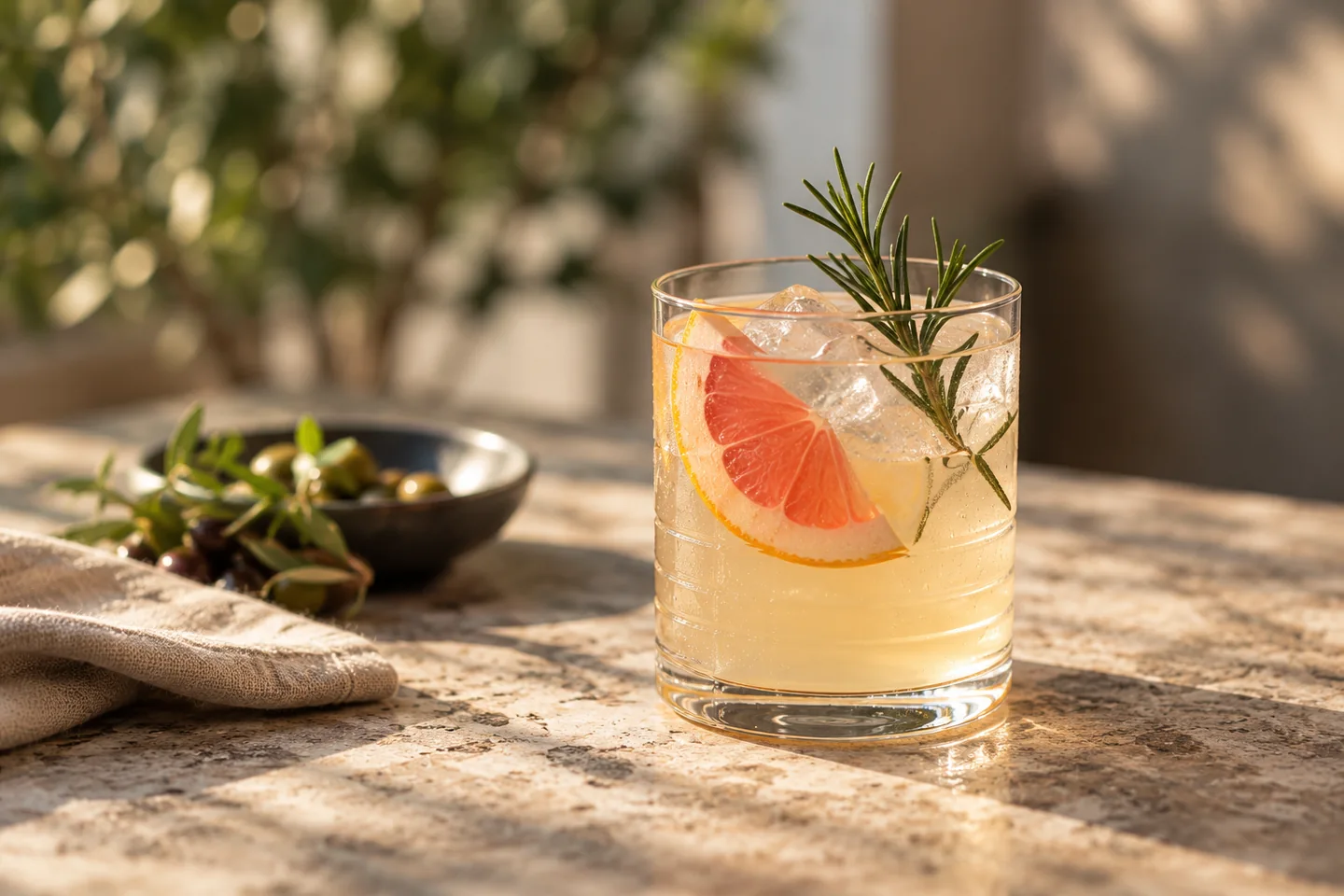
For a simple starting point, put plenty of ice in a small tumbler, add sparkling water and a little fresh grapefruit or lemon juice, then finish with a piece of citrus peel and a sprig of rosemary. Adjust the proportions to your taste. This is an invitation to experiment, not a prescribed health recipe.
If citrus does not suit you, try a chilled infusion or another juice you enjoy. Check the ingredients of syrups, extracts, bitters, and fermented mixers. An alcohol-free base does not automatically make every ingredient in a mixed drink alcohol-free.
- Freshness: citrus, a crisp tea, or a small splash of a tart juice.
- Aroma: a citrus peel, mint, rosemary, or another familiar culinary herb.
- Texture: good ice, fine bubbles, or a smooth chilled base.
- Balance: enough sweetness to suit the ingredients and your own preference.
Make the ritual work for you
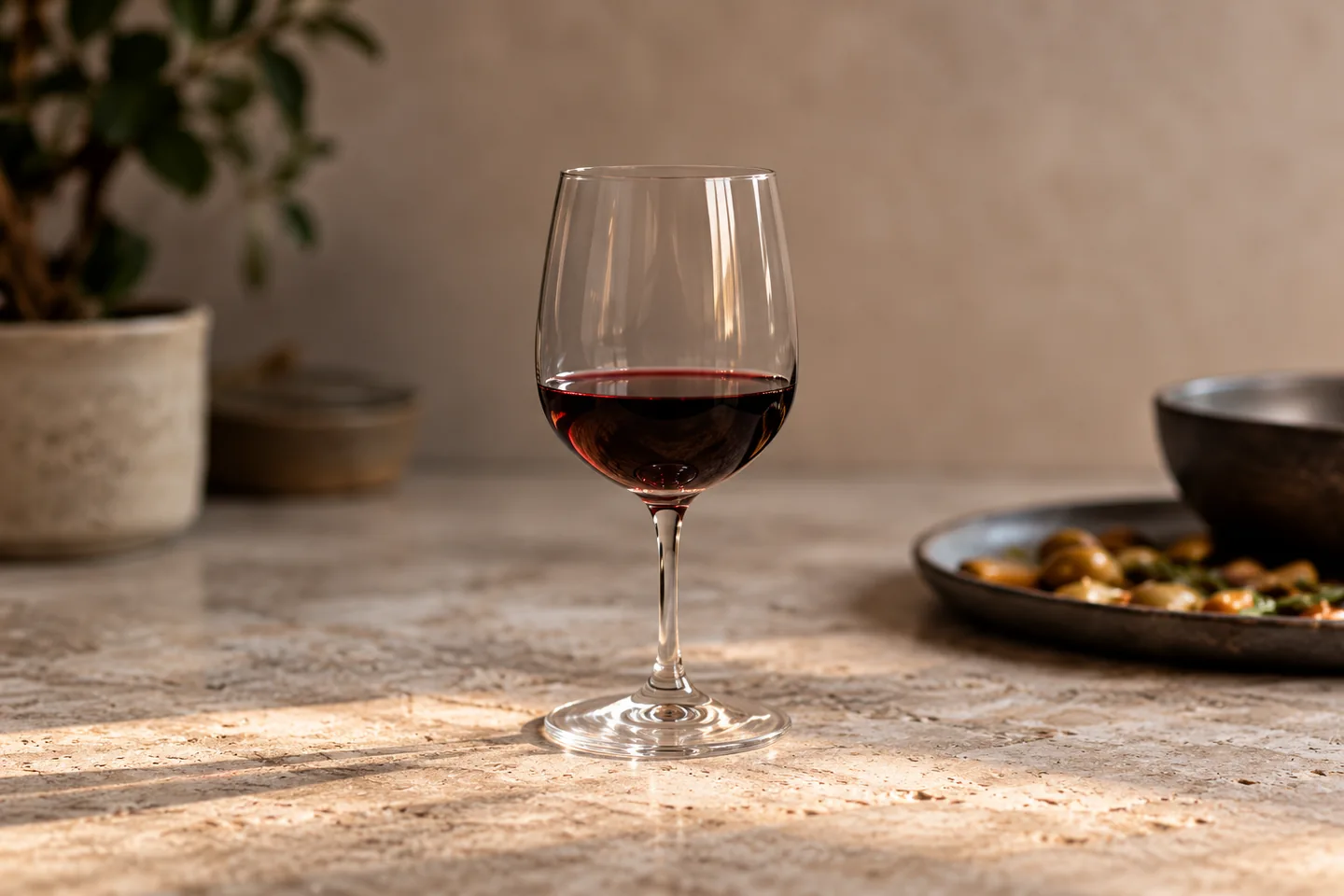
Use a glass you like. Chill it if that improves the drink, put it on the table with the food, and give it the same care as the other choices being served. Presentation does not need to be elaborate. An ordinary glass, clear ice, and an unhurried moment can be enough.
A familiar wine glass is enjoyable for some people and unhelpful for others. If it brings back an urge you are trying to avoid, choose a different glass or a different ritual entirely. There is no obligation to keep a cue simply because it looks elegant.
Read the label, even in the alcohol-free aisle
Label wording matters. In US FDA guidance, “non-alcoholic” and “alcohol-free” are not equivalent descriptions for dealcoholized wine: a non-alcoholic product may contain a small amount of alcohol. Look for the ABV statement and the full product description instead of relying on the largest words on the front.
If avoiding every trace of alcohol matters for a medical, recovery, pregnancy, religious, or personal reason, check the product carefully and ask an appropriate professional when you are uncertain. A premium-looking bottle is not evidence that it meets your particular needs.
Give the alcohol-free option a proper place
At a shared table, offer the choices together and describe them with the same care. “Sparkling water with citrus and rosemary” feels more considered than an apologetic last-minute substitute. Let people choose without asking for an explanation.
The point is to make an evening enjoyable on the terms you have chosen. Keep the parts that bring you pleasure, change the parts that no longer fit, and leave room for a drink that is simply good in its own right.
The evidence behind the story
Sources & further reading
- FDA: Dealcoholized wine and malt beverages—labeling ↗
- NIAAA: Social support from friends and family ↗
Editorial standards · Sources are linked so you can inspect them. No clinician review is claimed. Read our evidence standards.