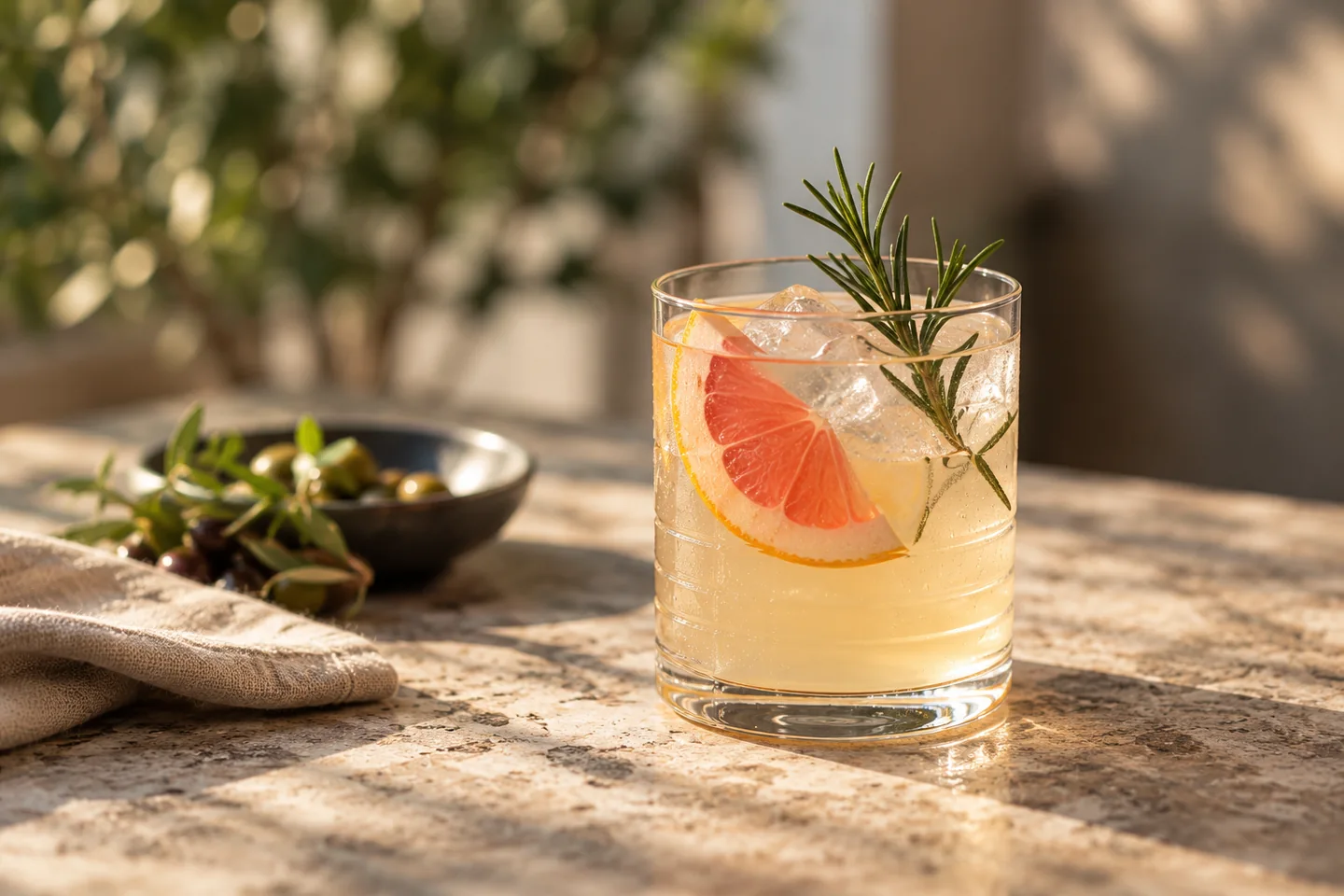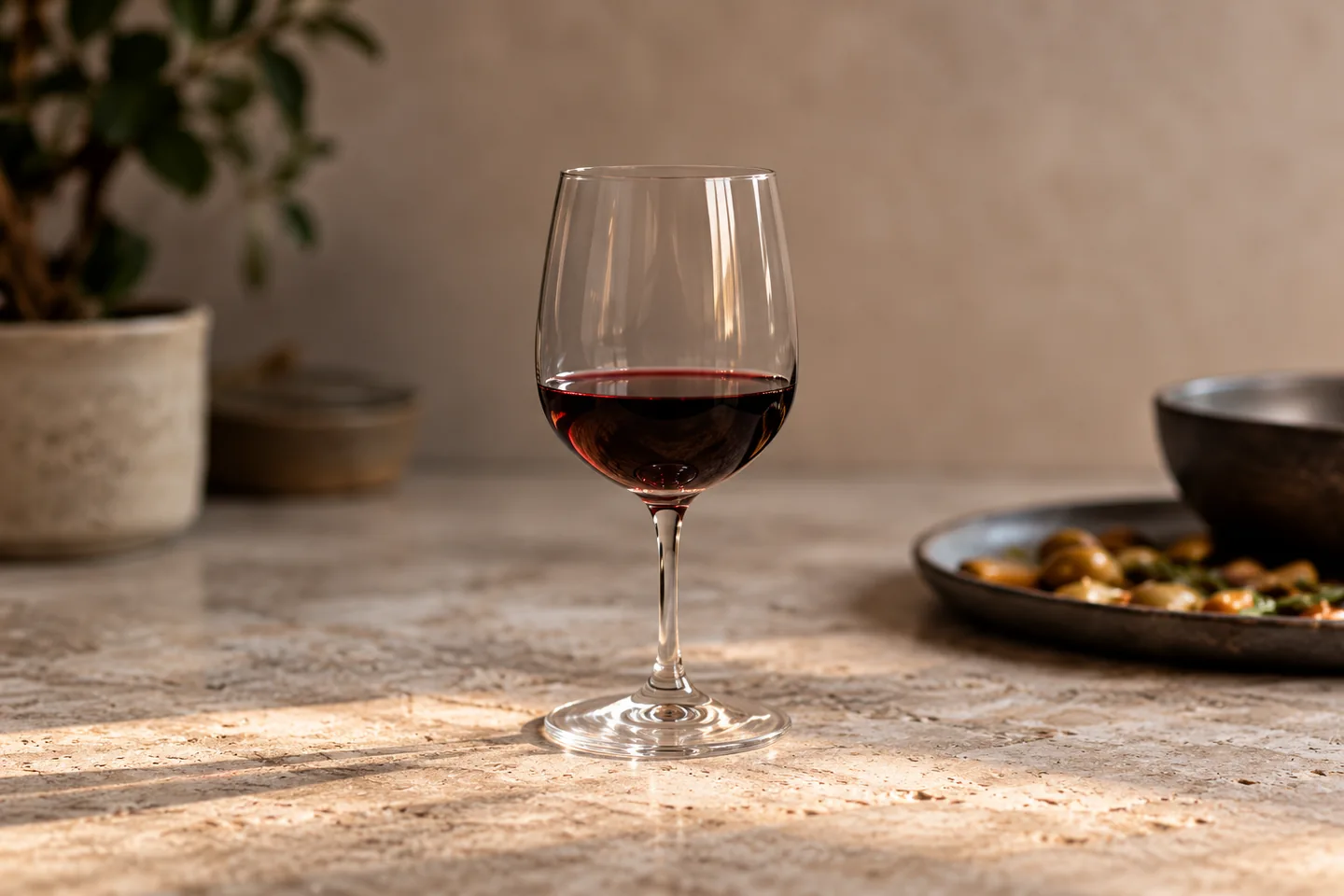
A bottle can say a great deal about a landscape, a mood, or a way of living. The information that helps you understand alcohol exposure is usually more ordinary: its ABV, the size of the pour, and the precise words used to describe the product.
Start with the percentage
ABV stands for alcohol by volume. It describes the proportion of a drink’s volume that is alcohol. If you pour the same amount of two wines, the one with the higher ABV contains more alcohol. Read the bottle you are actually using, rather than assuming that a style or grape always has the same strength.
A percentage needs a volume beside it to become useful. A small pour of a higher-ABV wine and a larger pour of a lower-ABV wine can contain similar amounts of alcohol. The calculator lets you look at those two inputs together without relying on the impression made by a glass.
Recognise a measure, not a recommendation
A US standard drink is a comparison measure. NIAAA gives 5 US fluid ounces of wine at 12% ABV as one example. It helps explain alcohol content across different beverages; it does not tell a particular person what they should drink.
A bottle may contain several servings, and a restaurant’s serving may differ from the standard-drink example. The actual pour matters more than the word “glass.” Use an estimate when needed, and keep the unit consistent.
Look closely at alcohol-free wording
The language on dealcoholized products deserves attention. US FDA guidance distinguishes “non-alcoholic” from “alcohol-free”: the former can describe a dealcoholized wine that retains a small amount of alcohol. A claim on the front of the bottle should be read alongside its ABV and the complete description.
Definitions and labelling requirements vary by country and product category. If avoiding alcohol completely is important, inspect the specific product and ask for clarification when the information is unclear. An article or calculator cannot verify an individual bottle’s contents.
Treat attractive health language carefully
Terms such as organic, natural, low-sugar, or premium do not establish that an alcoholic drink is safe for your health. They may describe a production choice or a product characteristic, but they do not remove the alcohol. CDC identifies health risks associated with drinking, including wine.
Lower alcohol can be a useful product characteristic to notice, but the amount you consume still matters. Replacing one product while pouring a larger amount can change the calculation. Focus on the information that describes the drink rather than interpreting a design style as evidence of a health benefit.
Make the information easy to use next time
When recording a pour, enter the volume and ABV from the current bottle. If the label is difficult to read, keep your entry marked as an estimate instead of choosing a number that looks precise. A brief note such as “restaurant pour, approximate volume” makes the limitation clear when you look back.
If you are serving guests, leave the label available or know where to find the details. Let people choose their own amount and ask before refilling. The aim is to make a decision easier to understand, without turning dinner into an examination.
You do not need to learn every term on the shelf. Reading a few useful facts consistently is a good place to start.
The evidence behind the story
Sources & further reading
- NIAAA: What is a standard drink? ↗
- FDA: Dealcoholized wine and malt beverages—labeling ↗
- CDC: Alcohol use and your health ↗
Editorial standards · Sources are linked so you can inspect them. No clinician review is claimed. Read our evidence standards.